

### Blog Post:
Copper tiles bathroom designs are transforming everyday bathrooms into warm, statement spaces for real homes. More than just a trend, copper tiles bring a balance of style and practicality that suits everything from compact apartment bathrooms to spacious primary suites. In this realistic guide, discover how to make copper tiles work for your routines, layout, and lifestyle—instead of just for show.
Key Takeaways
- Copper tiles add warmth, visual depth, and a one-of-a-kind patina to bathrooms while offering antimicrobial and stain-resistant benefits.
- They’re suitable for wet areas when properly installed and require only simple care to stay beautiful and safe for everyday use.
- Mixing copper tiles with ceramics or naturals can anchor a room, suit both vintage and modern tastes, and increase your bathroom’s resale value.
- Understanding Copper Tiles in the Modern Bathroom
- How to Style and Install Copper Tiles in Your Bathroom: Step-by-Step
- Advanced Analysis & Common Pitfalls: Real World Issues with Copper Tiles
- Conclusion: Are Copper Tiles Right for Your Bathroom?
- FAQ
Understanding Copper Tiles in the Modern Bathroom
Copper tiles are more than just a pretty detail. In 2024, copper tile finishes are being called out by designers as a top way to create a bathroom that feels tailored, inviting, and unique (see Tile Choices). Whether you live in a city rental with limited natural light or a suburban home with a spacious master bath, copper pulls the eye and grounds a space thanks to its warm undertones and living finish.
The visual effect matters. While many tile trends come and go, copper’s reflective surface and rich coloring make even small bathrooms feel one-of-a-kind. Used as an accent (think: a shower niche, a backsplash, or a trim) or as the main event (full shower wall or floor), copper makes a statement but remains practical. The natural patina evolves over time, meaning your bathroom will develop a character that mass-market tiles can’t match.
Copper is also about more than looks. Its antimicrobial properties naturally fight bacteria (outperforming stainless steel), so it’s appealing for families who want low-germ solutions as well as style (source). The surface resists stains, and when used in the right thickness, it thrives in wet spaces, simplifying maintenance in everyday life—no harsh scrubbing required.

How to Style and Install Copper Tiles in Your Bathroom: Step-by-Step
- Decide where copper will have the most impact. Use copper as a shower wall accent, vanity backsplash, or unexpected floor border. In a small bathroom, a dramatic copper penny tile niche draws the eye without overwhelming the room. In an open-plan ensuite, larger smooth copper panels or mosaic tiles can anchor the space and work well with both classic and modern fixtures. For ideas on mixing tile types, see this unique tiles guide.
- Pair with other textures and finishes. For a timeless look, blend copper tiles with neutral ceramics or matte blue tiles. This combination creates natural contrast, pulling out copper’s warmth while keeping the space from feeling overly shiny or heavy. Think of textured stone, white subway tile, or even wood-look porcelain to offset copper’s richness.
- Plan for patina and everyday use. Place copper tiles where splashes and wear will help (not hurt) the finish. The patina shields the metal, and the look becomes more dynamic over time—so install where you don’t mind evolving color. Busy family bathrooms or guest spaces both work, but avoid using pure copper tiles on heavily used floors if you don’t want visible aging or potential scratches.
- Choose the right tile format for your bathroom scale. Small penny tiles or mosaics suit powder rooms, tight bathrooms, or even apartment spaces that need just a highlight. For larger, light-filled bathrooms, go for bold geometric sheets or stamped panels to make the most of copper’s reflective properties. See more examples of vintage maximalism and focal-point tile use here.
- Use proper installation and cleaning techniques. Always install copper tiles with epoxy mortar and 1/16″ grout lines to ensure moisture resistance and durability. Use non-abrasive cleaners and a soft cloth for routine cleaning; harsh scrubbing will strip patina and shine. For slip resistance, opt for copper-capped porcelain tiles on floors.
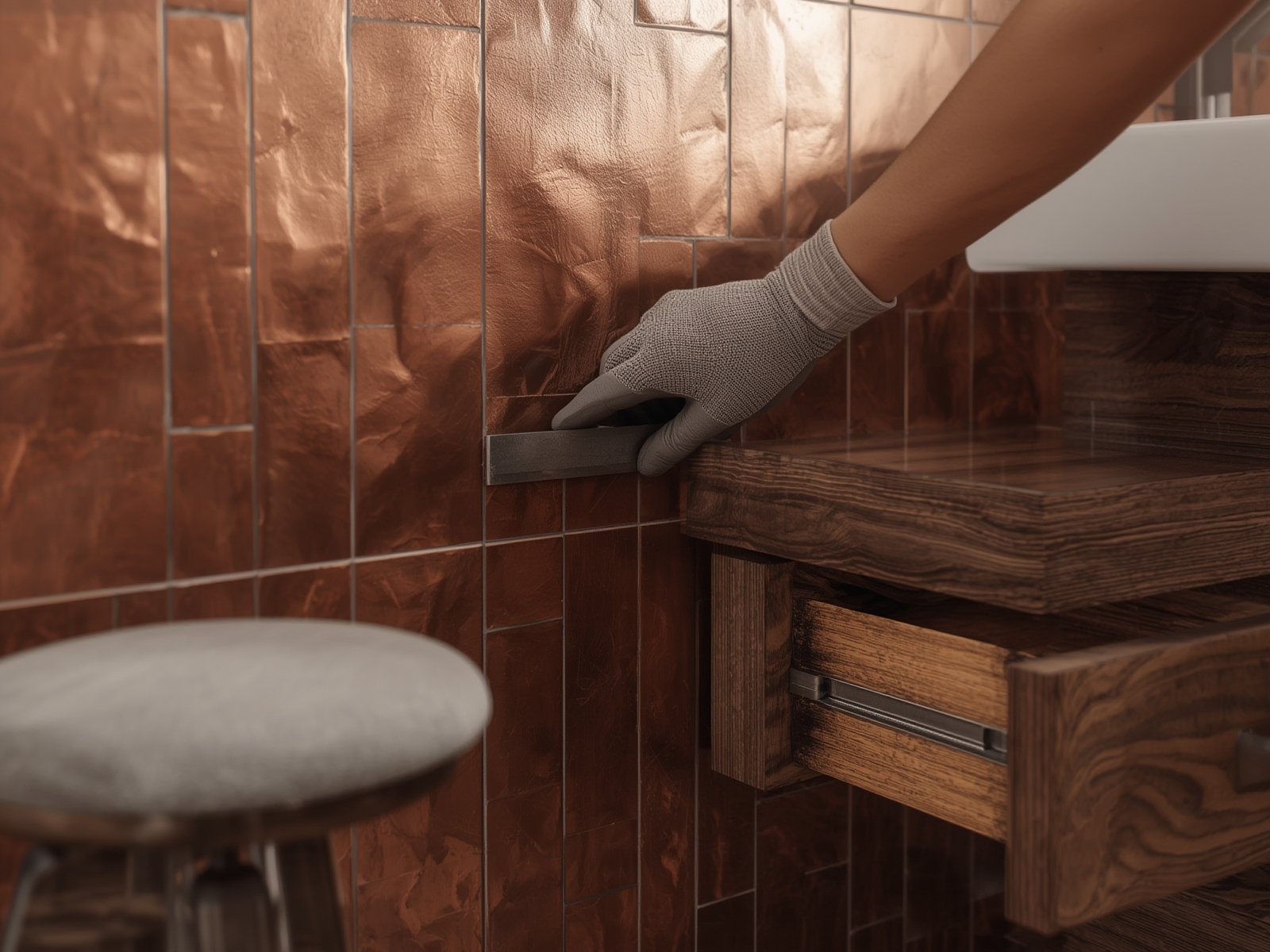
Want even more ways to balance aesthetics and practicality in your bath or small washroom? Explore how other anchored pieces—like a narrow wood console table or a lift-up storage bed—are saving space and adding polish in US homes.
Advanced Analysis & Common Pitfalls: Real World Issues with Copper Tiles
Most guides ignore the headaches copper tiles can bring if you don’t plan for daily wear, scale, or the specifics of your home. Here are the most common pitfalls—plus a practical comparison with other options.
| Property | Copper Tiles | Blue Ceramic Tiles | Modern Porcelain Tiles |
|---|---|---|---|
| Visual Impact | Warm, layered, reflective, develops patina | Cool, crisp, bold color field, suits patterned/eco trends | Clean, consistent, modern; mimics stone and wood |
| Slip Resistance | Needs copper-capped porcelain for safe flooring | Varies—regular ceramic can get slippery unless textured | High—options for textured finishes and anti-slip |
| Maintenance | Easy cleaning, low-germ, but patina/aging is visible | Generally easy; no patina, wide range of colors and durability | Easiest—stainproof, scrub-friendly, stable finish |
| Durability | Solid at 10mm for walls; softer than porcelain on floors—use with care | Good in normal moisture; may chip or craze under impact | Top-tier; handles high traffic and water without issues |
| Cost | Varies—premium finish, often more expensive than ceramics | Affordable, wide range of price points | Moderate, depends on format and brand |
Common Pitfalls to Avoid
- Incorrect floor placement: Pure copper tiles may be too soft for high-traffic bathroom floors and can scratch. Always opt for copper-capped porcelain for flooring to maintain safety and durability (source).
- Neglecting patina: Copper will develop a patina, resulting in tonal shifts and color changes. If you expect a static, shiny look, this could disappoint over time. Lean in and plan for evolution, not perfection.
- Mismatched scale: Small tiles in a large bathroom can read as busy or lost; oversized copper panels in a tiny powder room may feel overwhelming. Consider the room’s volume, light, and what you want the copper to “anchor” visually.
- Poor installation: Cutting corners on grout line size or using the wrong mortar can trap water under the tiles, causing both cosmetic and hygiene issues. Always match installation to the environment.
- Unrealistic budget assumptions: Copper tiles are premium and may cost more than standard ceramics or porcelain—don’t skimp on planning, and leave room in your budget for both tile and professional installation (see here for related backsplash trends).
If you’re still debating texture and tile choices, compare statement surfaces and their effect in other rooms in our unique tiles design trends guide—this can help sidestep aesthetic regret down the line.
Conclusion: Are Copper Tiles Right for Your Bathroom?
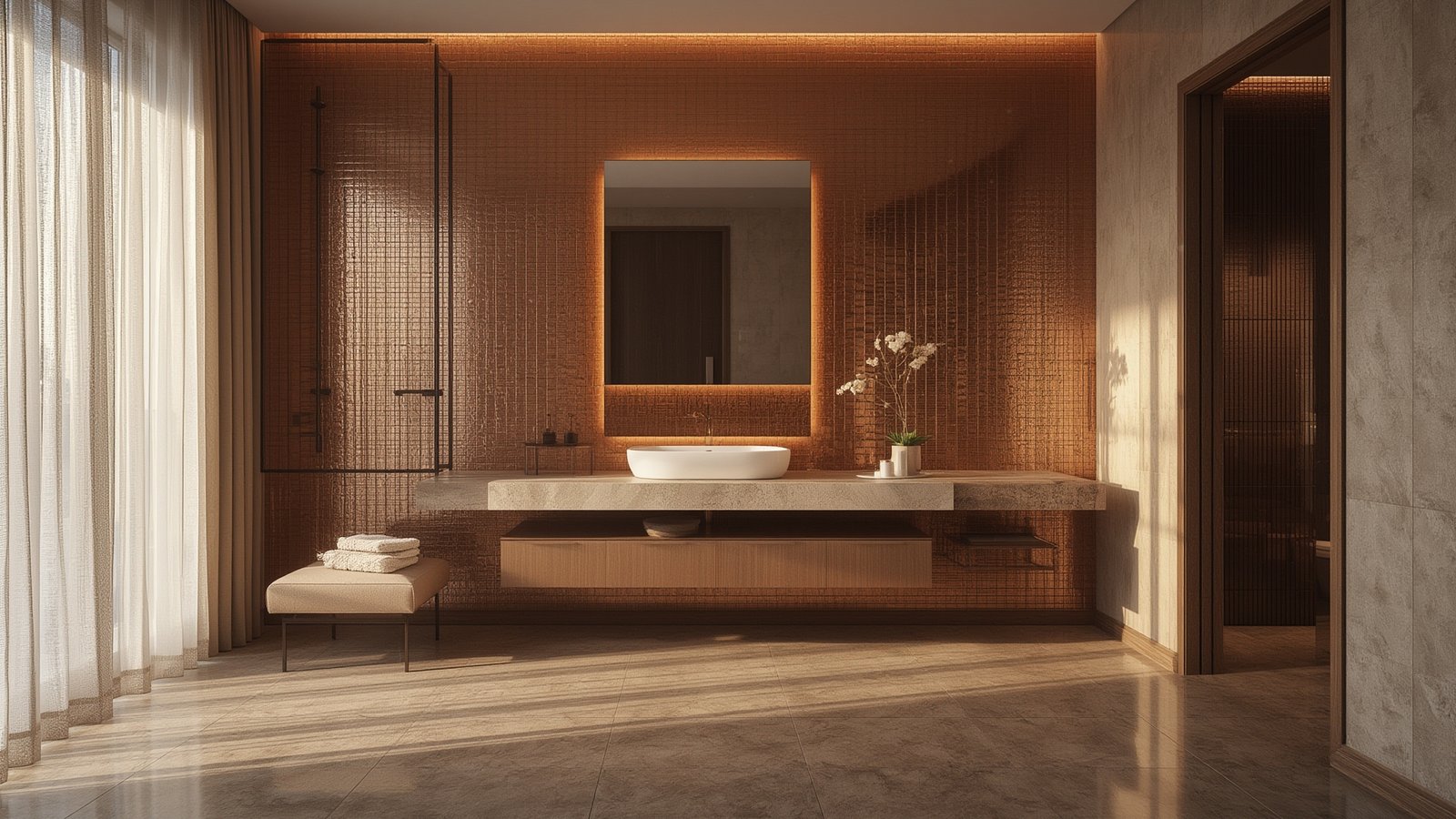
If you want a bathroom that’s undeniably inviting and visually anchored—one that feels distinctive, low-maintenance, and genuinely lived-in—copper tiles are worth consideration. Think carefully about placement, cleaning, and patina, especially in everyday spaces used by kids or guests. Ultimately, copper tiles bathroom solutions are ideal for homeowners and renters who want a room that feels as good as it looks. Ready for your transformation? Explore more ideas and start planning your update today.
FAQ
Are copper tiles actually water-resistant and safe for bathroom use?
Yes, copper tiles at least 10mm thick resist water when professionally installed with epoxy mortar and minimal grout lines. For floors, choose copper-capped porcelain tiles for slip-resistance and added durability (source).
Will the copper finish change, and do I need to polish or seal it?
Copper naturally develops a patina as it reacts with moisture and air. Some homeowners love this evolving look—it adds unique character. Don’t polish too aggressively; instead, allow the tile to develop a protective, living finish.
How do copper tiles compare with blue ceramic tiles in real bathrooms?
Copper tiles provide a warm, reflective, vintage-inspired or modern look with antimicrobial benefits but need more careful placement, especially on floors. Blue ceramic tiles are budget-friendly and ideal for bolder patterns, but may not offer the same depth of character or germ resistance.
Do I need a professional to install copper tiles?
Professional installation is strongly recommended, especially in wet zones where proper mortar and grout technique prevent leaks and ensure long-lasting beauty and safety.
Can I mix copper tiles with other tile types or materials?
Absolutely. Copper tiles look striking alongside white ceramics, blue encaustics, matte pastels, or even wood-look porcelain. Mixing textures is encouraged to balance the space and play up copper’s warmth.
—