

### Blog Post:
Smart pet feeder technology is transforming how we care for our cats and dogs, making feeding more consistent, more convenient, and often smarter than old school bowls. But is “smart” really better—and what do you need to know before buying?
Key Takeaways
- The global smart pet feeder market will reach up to $6.91B by 2034, with rapid growth in Asia Pacific and strong demand for Wi-Fi and programmable models.
- Most content and reviews skip vital info about cost, technical reliability, and real user experiences—meaning buyers should do extra homework.
- Lack of transparent pricing, support data, and species-specific testing are key blind spots; consider your own needs before choosing a feeder.
- What Is a Smart Pet Feeder and Why Consider One?
- How to Choose and Set Up a Smart Pet Feeder: Step-by-Step Guide
- Advanced Analysis: Common Pitfalls, Gaps, and Buyer Beware
- Conclusion: Is a Smart Pet Feeder Right for You?
- FAQ: Smart Pet Feeder Questions Answered
What Is a Smart Pet Feeder and Why Consider One?
A smart pet feeder automatically dispenses food for your cat or dog based on a pre-set schedule, smartphone app, or remote control—sometimes with added features like cameras, Wi-Fi, or even AI feeding adjustments. These devices are exploding in popularity among busy pet parents who want reliability, portion control, and peace of mind, particularly in urban settings and multi-pet homes.
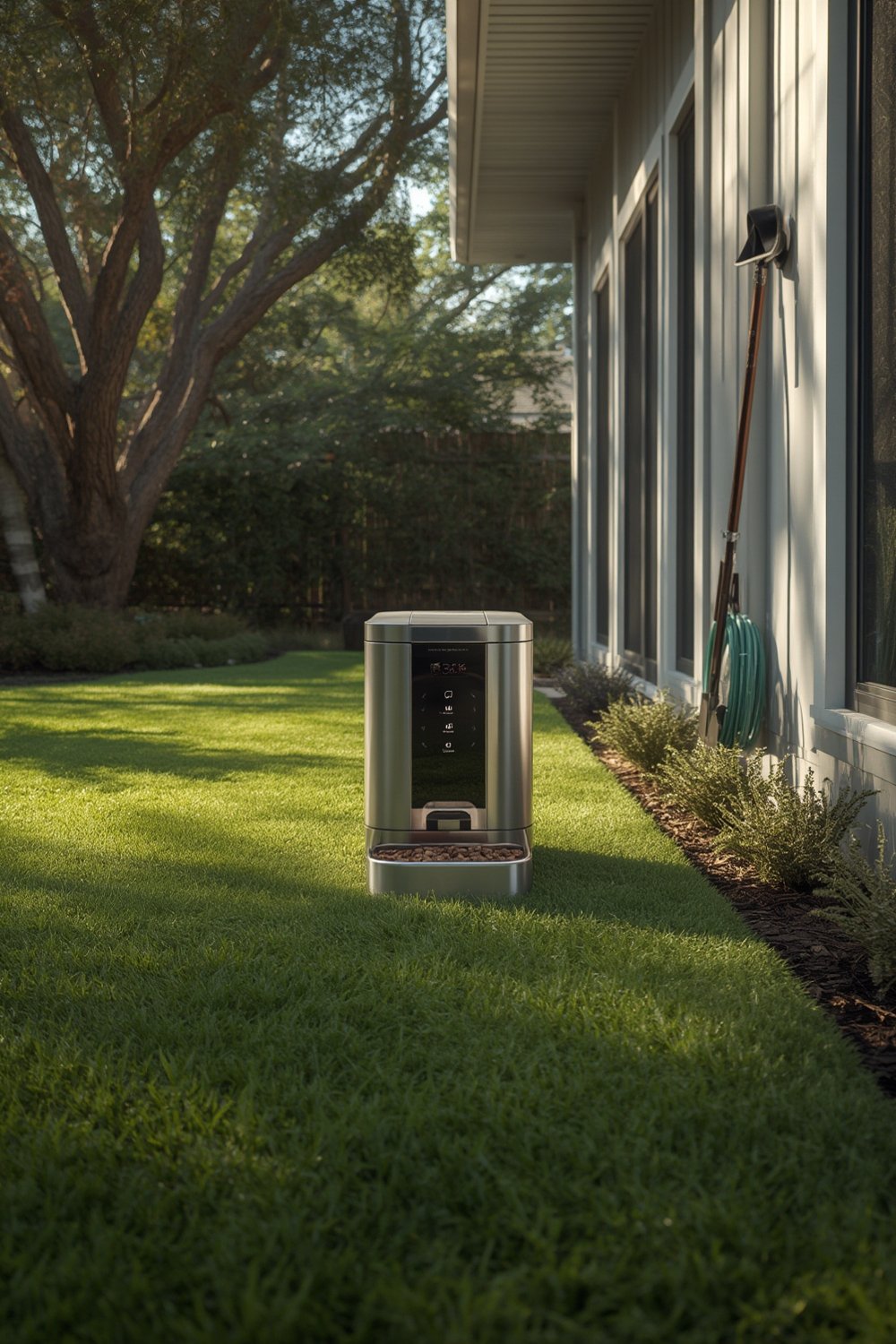
Sales of smart pet feeders have skyrocketed. In 2024, the global market sits between $2.31-$2.34B depending on which industry report you trust. North America owns 38% of the global share, but Asia Pacific is growing fastest at 19.3% CAGR thanks to booming pet culture in places like China and Japan (MarketIntelo).
Choosing a smart feeder is about more than high-tech bells and whistles. It’s about matching features—reliable portioning, pet-camera quality, integration with other smart home devices—to your pet’s breed, your work style, and your home setup. This is especially true if your pet is prone to overeating, anxiety, or has special feeding needs.
Interested in optimizing your pet’s lifestyle overall? See how barkitecture for dogs and catios for cats have become major trends for modern pet parents:
How to Choose and Set Up a Smart Pet Feeder: Step-by-Step Guide
Ready to automate your pet’s meals? Here’s a realistic, actionable walkthrough.
-
Identify non-negotiable features for your pet and home.
- For cats: Small, frequent portions; adequate slow feed mode for food-driven cats.
- For dogs: Bowl size, jam resistance, and robust construction for large breeds.
- If you want live monitoring, prioritize units with reliable camera quality and app reviews.
- Household integration: Double-check if your chosen feeder works with Alexa, Google Home, or Apple HomeKit. Many claim “smart home compatibility” but only offer partial support.
-
Research real-world reliability and support responsiveness.
- Look beyond “top 10” lists. Scan deep into negative reviews for complaints about setup headaches, missed feedings, or janky apps—especially with Wi-Fi models.
- If possible, call or email customer support before buying. Fast or helpful replies can indicate a reliable brand.
-
Calculate total ownership costs.
- Some feeders have hidden monthly or yearly fees for advanced app features or camera cloud video storage.
- Replacement parts (like bowls and lids) are often expensive or proprietary.
- Look for explicit warranty length and coverage. A cheap feeder with no support may cost more over time.
-
Set up and test before going “hands off.”
- Do a week of supervised feedings to check actual portion sizes versus what you programmed.
- Some feeders can under- or over-dispense—don’t assume accuracy out of the box.
- Test app and Wi-Fi alerts when you’re out. Walk out of Wi‑Fi goes down range and see if you still get notifications about missed feeds or errors.
-
Regularly clean and re-calibrate your feeder.
- Dry food crumbs can cause jams and misfeeds over time; monthly cleaning is a must.
- Pet obesity is a risk if dispensing is off—even a few grams per meal adds up over weeks.
- Review pet behavior. If you notice food guarding or anxiety with smart feeders, try re-introducing manual feeding sometimes.
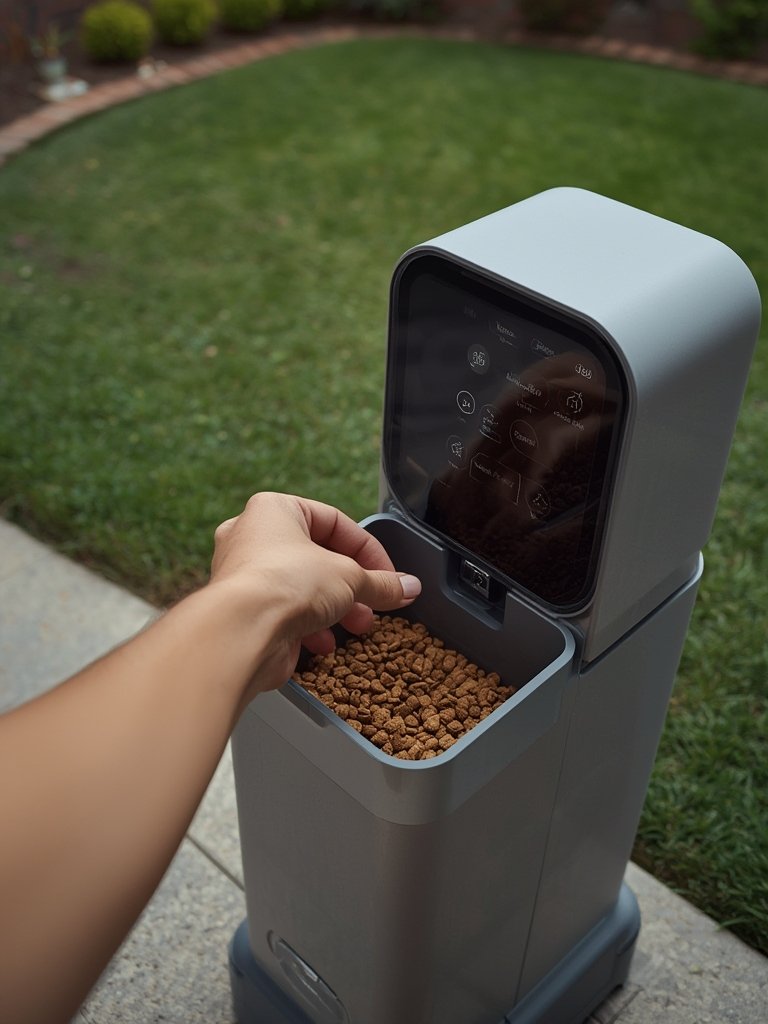
If you want a deeper dive into automatic cleaning or smart pet technology—including differences between self-cleaning litter boxes and feeders—check out our hands-on PuraMax Self Cleaning Litter Box Review and PetSnowy Automatic Litter Box Guide.
Advanced Analysis: Common Pitfalls, Gaps, and Buyer Beware
Most online guides gloss over real-world frustrations with smart pet feeders. Here’s what current research and customer chatter reveal—and what’s missing entirely.
| Feature / Issue | What Sellers Advertise | What Users Actually Experience |
|---|---|---|
| Portion Accuracy | “Precise dispensing” & programmable control | Frequent complaints of inconsistent portions, especially with small kibble; calibration often needed |
| App Performance | Seamless remote access, easy scheduling | Glitchy connections, notifications missed if Wi-Fi is unstable; proprietary apps may lack updates |
| Camera Quality (if equipped) | HD video, night vision, live monitoring | Camera lag, low resolution, or “premium” fee for cloud video storage; sometimes not useful in low light |
| Reliability | 24/7 operation, fail-safes, battery backup | Feeders can jam or reset after a power cut. Battery backup often missing in value models. |
| Cost Transparency | “No hidden fees,” “works out of the box” | Monthly charges for full app or camera functions; both initial and ongoing costs underreported by sellers |
Market Gaps and What Competitors Don’t Tell You:
- Real pricing is rarely disclosed up front. Expect $60-$400 for Wi-Fi feeders (basic to premium) but monthly fees for cloud-connected units with live video or notifications are almost never highlighted in ads.
- Zero standards for portion accuracy or “smart features.” No third party tests exist for portion reliability or app uptime among major brands as of 2024. Reports are anecdotal and inconsistent.
- Poor integration clarity for smart homes. “Alexa compatible” sometimes just means voice reminders or partial features, not full integration. Documentation is often incomplete.
- No veterinary or clinical data. While the growth in feeders with health-focused claims is huge (Zion Market Research), not a single major source provides real vet endorsements or studies on feeding anxiety or pet obesity outcomes so far.
If you want to go deeper into healthy feeding and supplementation, consider reading how dog probiotics or CBD for pets can help with balanced routines.

Curious how automation is changing other household routines? Our explainers on smart irrigation systems and EV home charging will help you decide if more “smart” gadgets make sense for your lifestyle.
Conclusion: Is a Smart Pet Feeder Right for You?
Smart pet feeder devices offer game-changing convenience—with a major lift in global usage driven by remote work, multi-pet homes, and rising time pressures on owners. But transparency on costs, reliability, and true health impact are still works in progress. Start by defining your actual needs, then invest in the smartest feeder you can reliably afford—always test thoroughly before trusting it 100%.
Ready to explore your options? Use this guide to ask smarter questions and avoid surprise costs. Whether your priority is vacation feeding, cat-specific features, or dog-proof construction, there’s a smart pet feeder for most situations—but match tech to your expectations for best results.
Want more honest tech product walk-throughs? Check out our latest reviews, like our lift-top coffee table or space-saving storage bed.
FAQ: Smart Pet Feeder Questions Answered
How accurate are smart pet feeders at dispensing food?
Many smart pet feeders claim precise portioning, but reviews and user tests show actual accuracy can vary, especially with smaller kibble. Testing and occasional recalibration is recommended—never assume out-of-the-box performance is perfect.
Are there hidden fees with app-connected feeders?
Yes. Cloud-connected cameras and advanced scheduling sometimes come with monthly or annual app fees, especially for live video or notifications. Always check the app description and terms before buying.
What happens if my Wi-Fi goes down?
If the feeder relies heavily on real-time cloud connection, it may default to the last programmed schedule or stop sending notifications. Look for models with local backup mode and consider adding an inexpensive UPS for critical feeding periods.
Can automatic feeders help with pet obesity?
They can help with portion control, but there are no peer-reviewed studies confirming smart feeders alone prevent obesity. Regular supervision and portion reviews are still necessary, especially for pets prone to overeating.
Are smart pet feeders safe for multi-pet households?
Some models are designed for multi-pet households, but competition or food guarding is common. Supervise early feedings and consider feeders with collar-recognition or separate compartments for sensitive pets.
—
[…] choosing between smart gadgets and traditional puzzle feeders? Explore our smart pet feeder guide to learn how technology can help automate enrichment and portion control in busy city […]
[…] smart home setups, consider pairing a pet fountain with a smart pet feeder for truly automated hydration and feeding. Just remember: tech for tech’s sake doesn’t replace […]